
From childhood to glass
Venice
Egidio Costantini is born in Brindisi on 22 April 1912. His father, Attilio Costantini, of Emilian origin, is a chief pilot in the Italian Royal Navy; his mother, Domenica Parlanti, comes from a family of Tuscan winegrowers. At six Egidio loses his father, struck down by the Spanish flu: the family finds shelter in Venice, with his maternal grandmother in campo San Gallo, and then settles in campo San Filippo e Giacomo1, where Egidio will live for most of his life.
The same year he enters the Istituto Scilla2, but stays only until the third year of primary school, impatient with military discipline. He finishes primary school and attends middle school at the Cavanis institute, then the technical school. At eighteen, having passed the examination at the Ministry of the Navy in Rome, he earns the international licence of first-class radio operator. He could sail on the great liners, but the Harbour Office turns him down: he is too young to take charge of a ship’s communications.
He joins the Venice Motorboat Club as an errand boy: within six months he is its secretary, within a year he organises and runs all its races.
The marriage
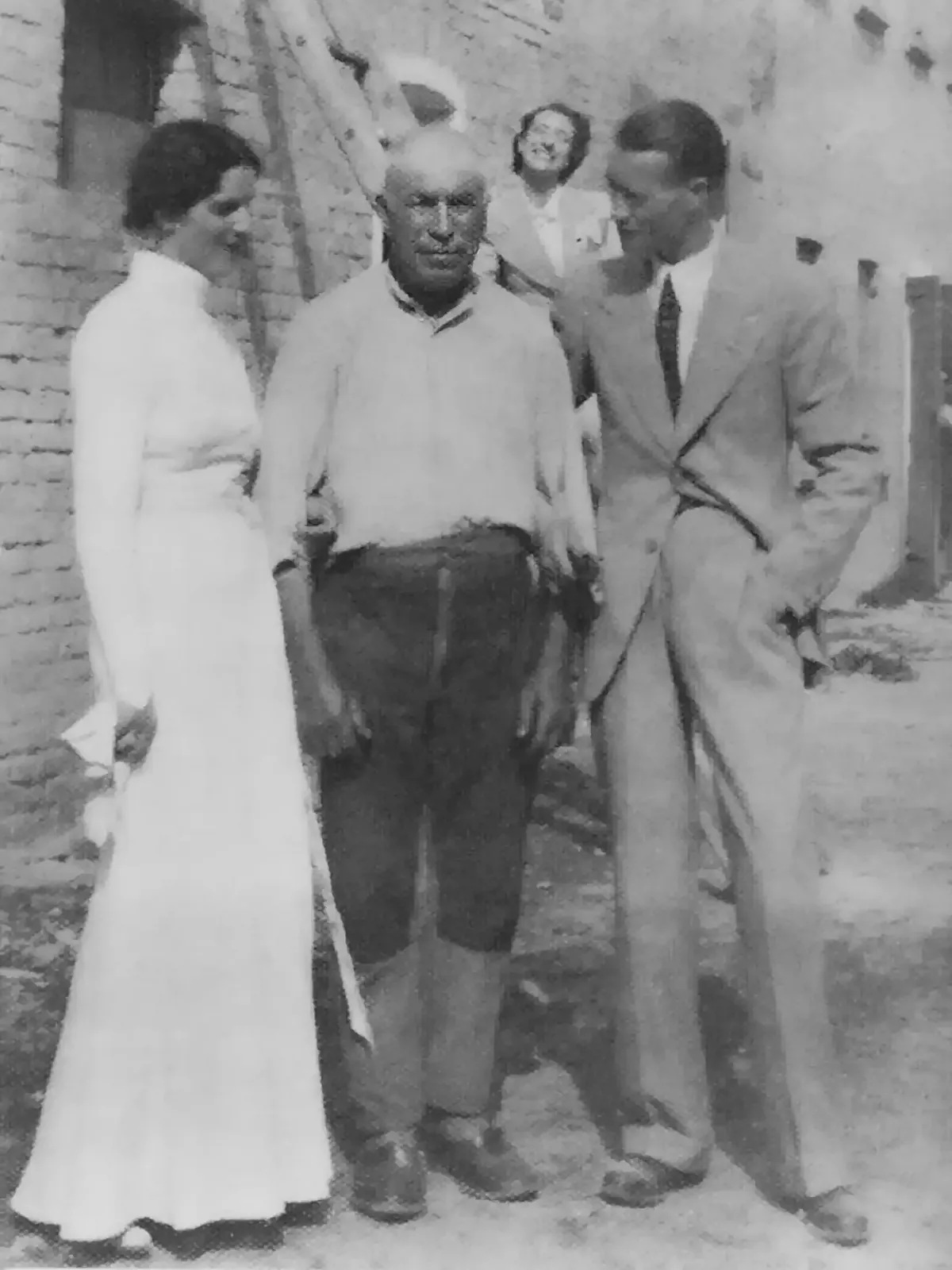
On 30 May 1937 he marries Emilia Dain, his fiancée of four years, who will stand by him until her own death, in 1986. Forty-nine years of mutual devotion, even through the hardest trials.
Three children are born of the marriage: Attilio in 1938, Maddalena in 1940, Egidia in 1947.
Botany
On 1 September 1939 war breaks out and the Motorboat Club ceases all activity. Egidio is taken on by the Banca Commerciale in Venice; behind the counter a youthful passion resurfaces, botany, to which he gives his free hours until his diploma from the University of Parma, in 1942.
Carnia
In 1945 the health of Emi3, who bears the salt air of the lagoon badly, calls for a return to her mountains: the whole family settles in Cercivento, in Carnia.
Having studied the land and the trees of the forest, with the help of a local blacksmith Egidio starts a small experimental plant. In two years there rise three kilns, cableways for the timber, a small aqueduct and a small power plant: a continuous cycle of four and a half hours distils a tonne and a half of wood, yielding charcoal, pyroligneous acid4 and other products.
Hard years; yet it is here that Egidio discovers glass.
Glass
One day, having let a kiln cool down to repair it, he finds the walls of the cylinder vitrified to a depth of a couple of centimetres. He lingers a long time contemplating them: they shade from blue to azure, and on to green. He calls Emi3 so that she may enjoy them too.
From then on those shades never leave him, and his life will have the purpose of reproducing them: Egidio senses that glass, until then the stuff of vases and drinking glasses, can give life to “immortal” works.
Continued in the chapter The beginning of a new life.
- In the same campo Egidio will open the first home of the Fucina degli Angeli. ↩︎
- School for the war orphans of the Navy ↩︎
- Emilia Dain, known as “Mamma Emi” ↩︎
- An acid liquid obtained by distilling wood; acetic acid and methyl alcohol were once made from it. ↩︎