
The beginning of a new life
Murano
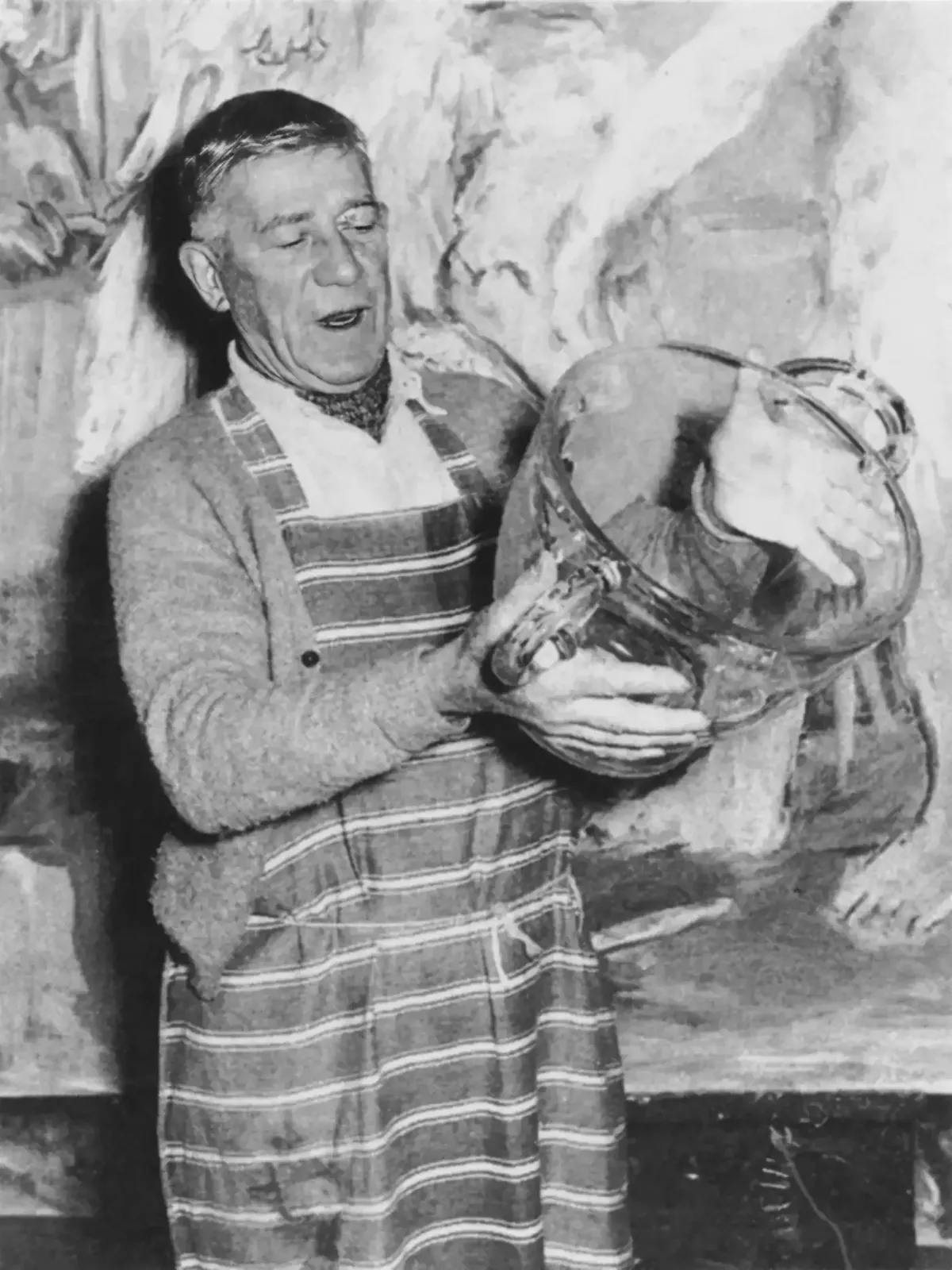
Back in Venice, he comes into contact with Murano as a sales agent for some glassworks: the job lets him talk with the master glassmakers and observe, with a botanist’s eye, every stage of the work.
Having mastered techniques and knowledge, he gives up the agency and devotes himself entirely to glass.
The method
At first he makes on his own amphorae, vases, bowls, drinking glasses and ashtrays of original design. The solitary experiment does not last: Egidio senses that glass can equal sculpture and painting only through the meeting of three minds. The artist conceives the work; the master glassmaker commands the technique; he knows how to translate forms, colours and expressions from canvas into glass, without reducing them to copies.
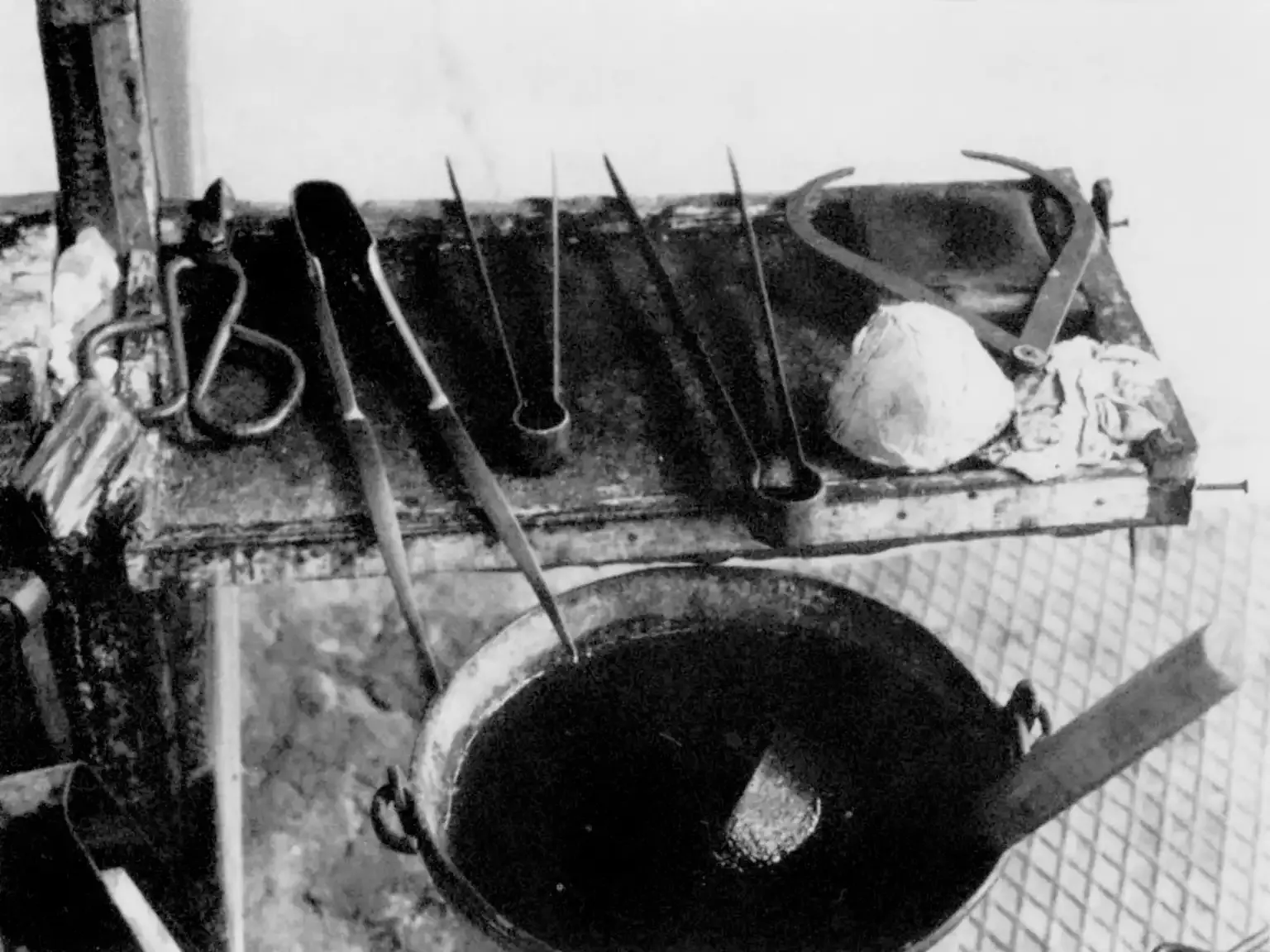
He knows that the work in glass will share with the drawing or the maquette2 only the idea that gave rise to it: in form, colour and size it must find a balance of its own, following the nature of the material.
The Centro Studio Pittori
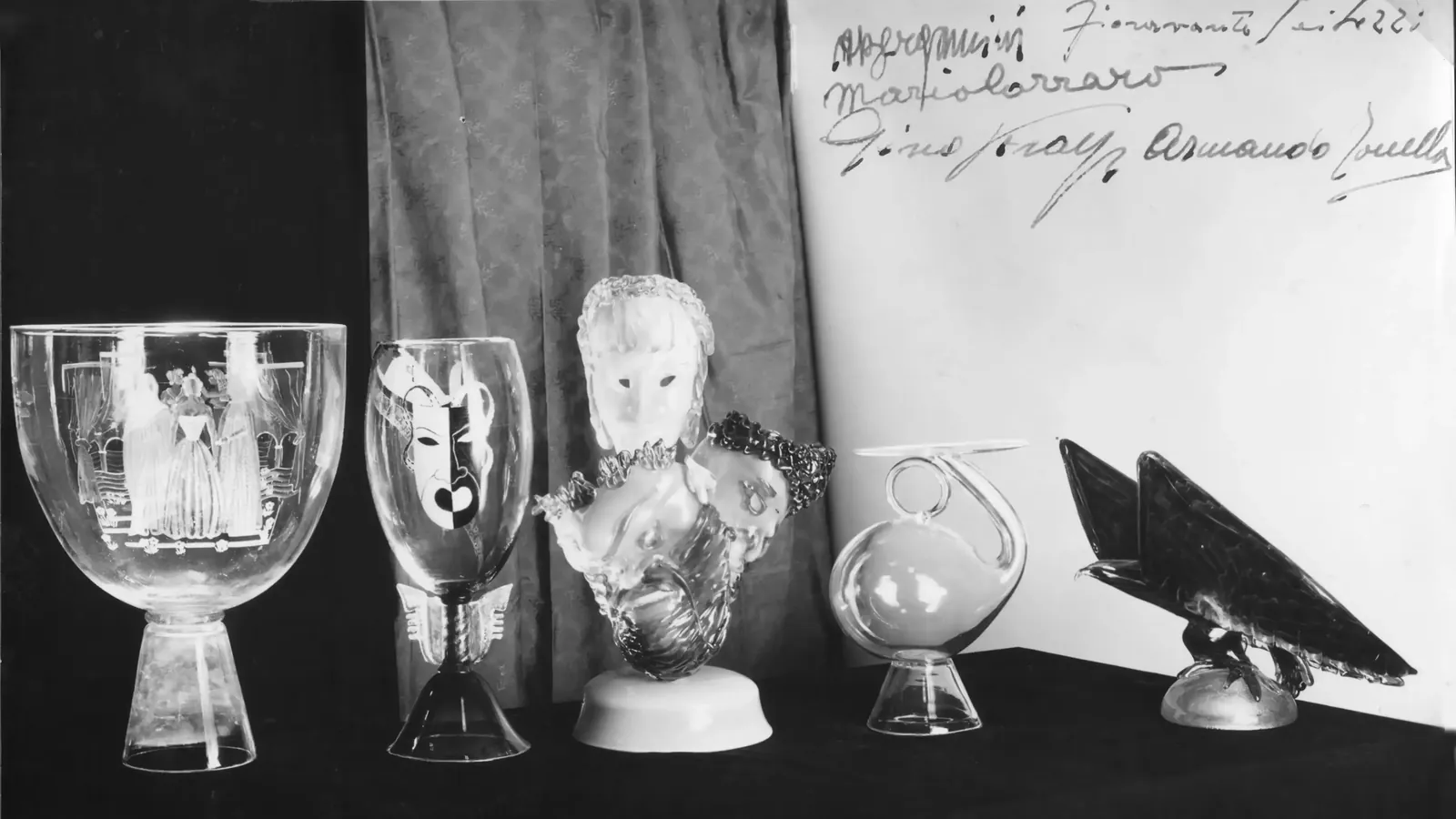
The first artist Egidio turns to is Gino Krayer, a Venetian Surrealist painter, who gives him some drawings for his experiments. In a Murano furnace, guiding the master glassmaker’s hand with his voice and his eyes, Egidio draws from them the first pieces in glass, which win the painter’s approval at once.
Krayer then introduces him to other Venetian artists, Fioravante Seibezzi, Armando Tonello and Mario Carraro, whose drawings Egidio translates into glass in turn. Of each, as he will always do with everyone, he asks and obtains full freedom to make the work by his own intuitions. So is born the Centro Studio Pittori nell’Arte del Vetro di Murano, the group founded by Egidio, active from 1950 to 1955.
On 18 April 1953 the first group exhibition opens in Murano, and then travels to Treviso, Perugia and Rome.
The letters
In the same years Egidio feels the need to set down in writing his idea of a radical transformation of the Art of Glass, and puts it, in dozens of letters, to the masters of the time. The first to answer is the Austrian painter Oskar Kokoschka: in 1952, from one of his drawings, comes the Bacchantes Vase, with inverted handles. There follow the works after drawings by Le Corbusier, among the first the Blue Bucranium3 (1954).
Paris
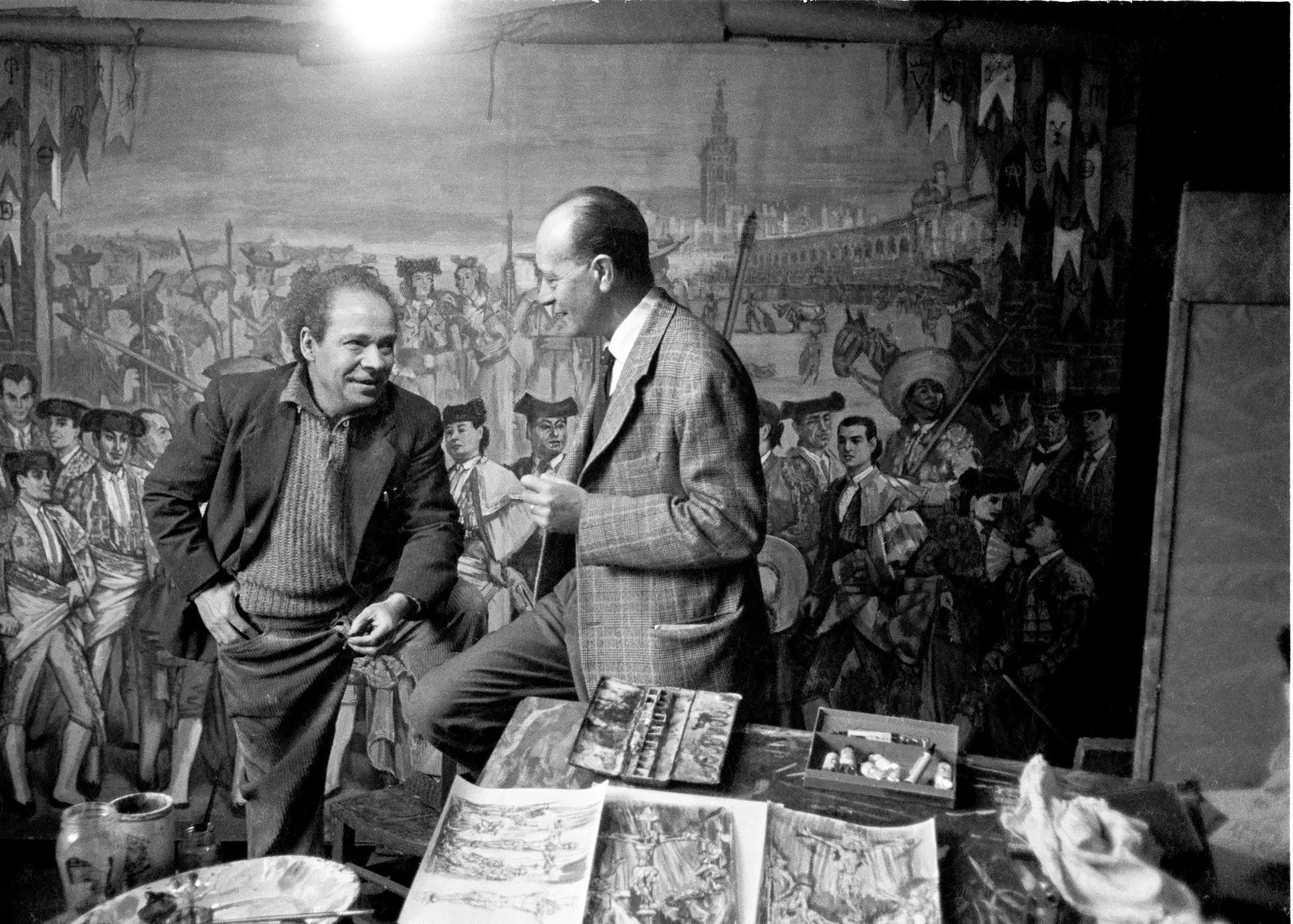
In 1954 Egidio goes to Paris in search of a friend of Picasso who might introduce him with a letter: the Spanish painter Pedro Flores offers. In Paris Egidio had already met Calder, to whom he had delivered the fish taken from one of his drawings; Jean Fautrier, who had given him a drawing; Gino Severini; and finally Saverio Pozzati, known as Sepo, who had given him Flores’s name.
Pablo Picasso
From Paris he goes on to Vallauris4, on the Côte d’Azur, where Picasso lives. From their meeting comes a collaboration, and with it a friendship that will last until Picasso’s death, in 1973. The Andalusian master entrusts him with the drawings of the Flamenco, the Centaur and the two-faced Janus: so come to life Egidio’s first works after drawings by Picasso, which other meetings and other works will follow.
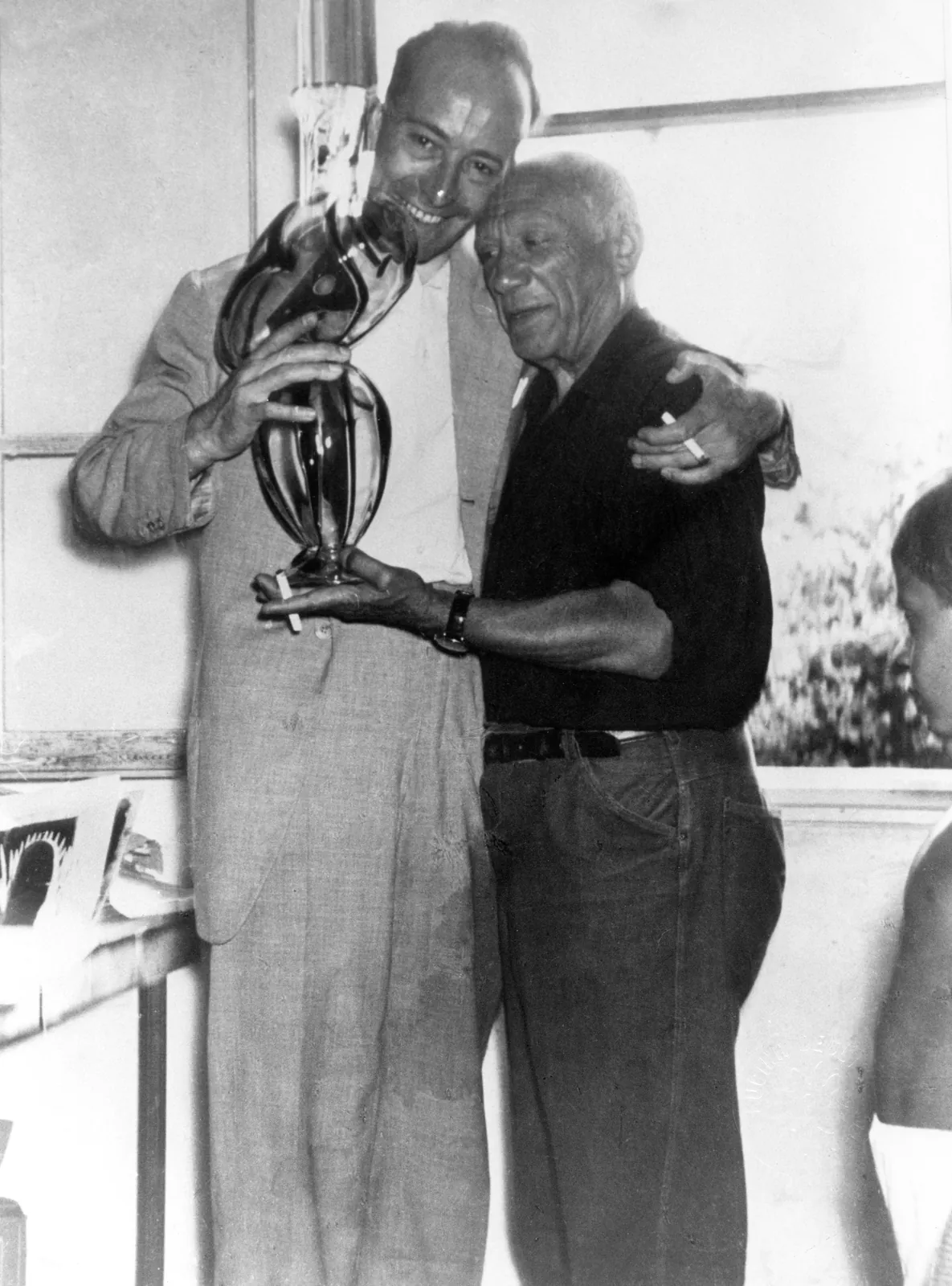
On his journeys to France Egidio becomes a friend and collaborator of Jean Cocteau and of the poet André Verdet, both friends of Picasso.
The Fucina degli Angeli
Towards the middle of the 1950s the Centro falls into crisis: Egidio means to let his art grow, while some of the artists aim at quick profit. In 1955 the break is inevitable: Egidio resigns as partner and director of the Centro and goes his own way.
That same year he opens a gallery of his own in Venice, in campo San Filippo e Giacomo, to which Jean Cocteau gives the name of Fucina degli Angeli. There the works of Egidio and his artists are shown, and there the new art movement will take shape. Yet the Fucina is not a furnace, nor did Egidio ever own one: the works are born, with few exceptions, in the furnaces of Murano.
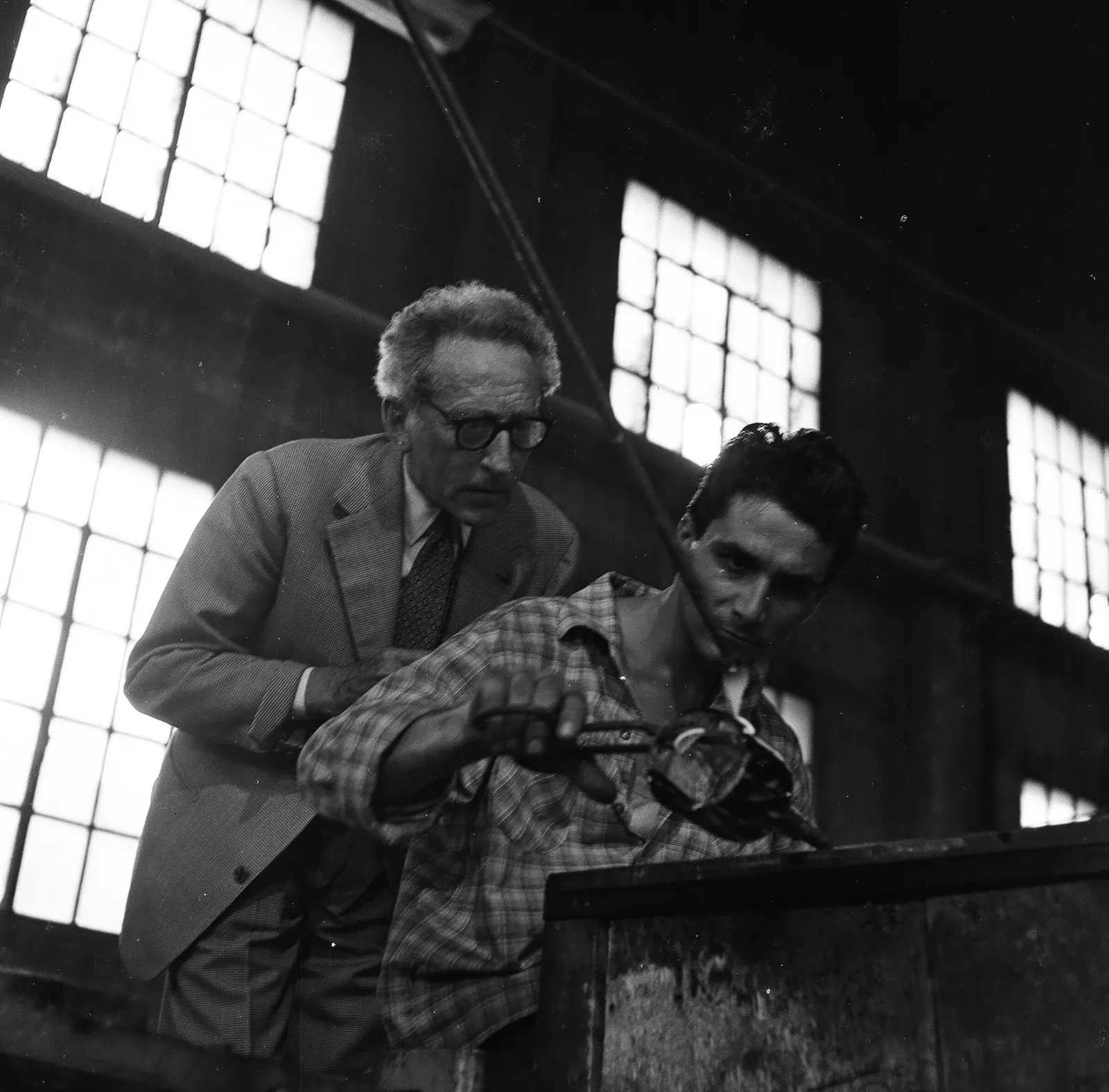
The years pass between journeys abroad, to France and Switzerland, and new members of the movement: Arnoldo Arnoldi, known as Nagh, Manfredo Borsi, the German painter Hans Hartung and Marc Chagall. It is a happy time: the name of the Fucina takes hold in Europe, and Egidio’s work is divided between the Murano furnaces and the mounting of exhibitions in Italy and abroad.
Continued in the chapter The years of success.
- The wooden bench at which the master glassmaker works. ↩︎
- A small-scale model with which the artist prepares a sculpture. ↩︎
- The bucranium, an ox skull hung with garlands, is a decorative motif of classical architecture. ↩︎
- A town on the Côte d’Azur, a centre of ceramics, where Picasso lived and worked from 1948 to 1955. ↩︎