
The years of success
The crisis
1958 opens a time of economic and moral crisis for Egidio, for his family and for the Fucina degli Angeli. Through an error in the paperwork, the works returning from an exhibition in Dortmund are not recorded as temporarily exported1, and the customs demand a duty of seven hundred thousand lire, a large sum for the time. Once the debt to the State is paid, Egidio is forced to close the Fucina.
For three years he leaves art and works at the wholesale markets of Mestre, as a bookkeeper and, when needed, as a porter; his wife and children too play their part in getting through those years.
Peggy Guggenheim
The turning point comes in 1961: through a friend Egidio meets Peggy Guggenheim, and a deep friendship is born between them at once. With her support, financial too, Egidio returns to his mission as an artist and the Fucina comes back to life.
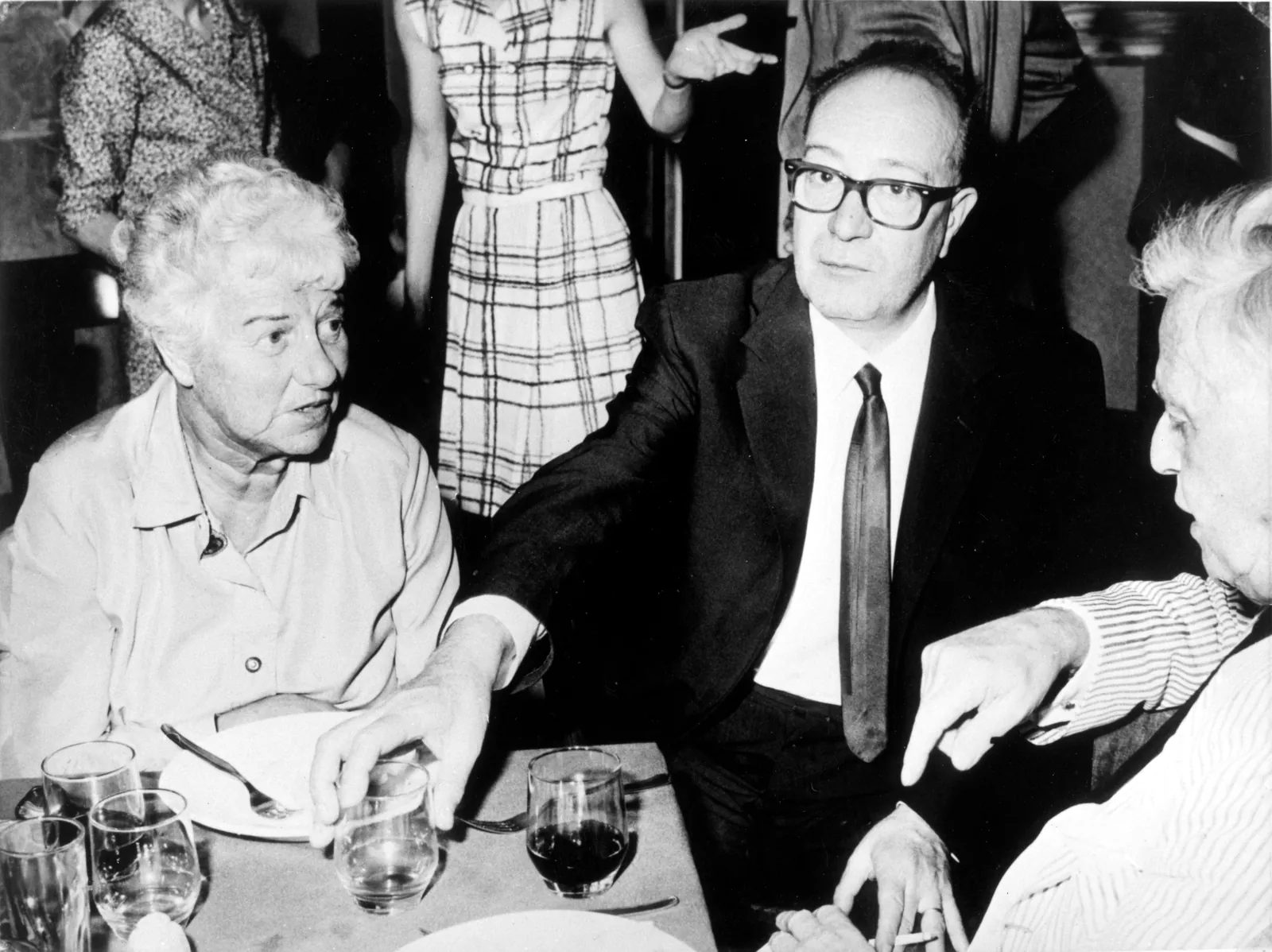
In 1964 Peggy has the works of the Fucina shown in her own palazzo; the following year she opens to him the homes of illustrious and powerful men such as Nelson Rockefeller and the doors of the Museum of Modern Art in New York, where the exhibition that opened in July at the Obelisco in Rome arrives in November. It is one more act of esteem and friendship towards Egidio.
Jean Arp
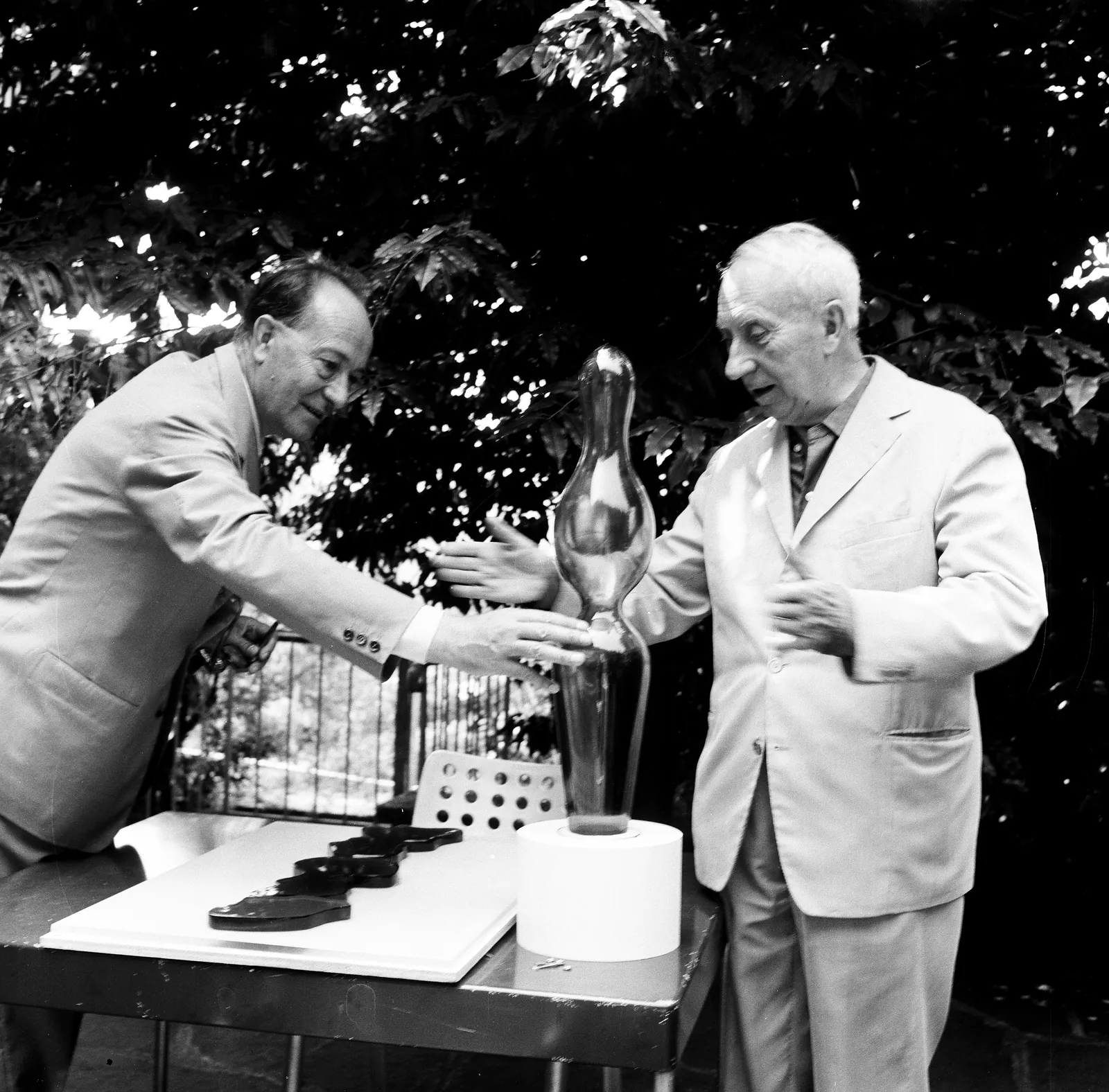
In those years Egidio meets the German painter and sculptor Jean Arp2, who entrusts him with one of his drawings to be translated into a glass sculpture; at their second meeting, the Three Graces win his approval and admiration.
The new home
On 14 June 1966 the new home of the Fucina degli Angeli opens, made from a former warehouse in Calle Corona, a few steps from the first. The design and works are entrusted to the architect Mikuni Omura, Egidio’s son-in-law. Among the sculptures on show are those of Max Ernst, whom he had met in Paris a few years before.
His fame is now international: nothing seems able to bar his way any longer.
The flood
On 4 November 1966 the acqua alta strikes Venice and reaches the record level of one metre ninety-four centimetres, flooding every ground floor: streets, homes, warehouses, shops. The Fucina too is overwhelmed. When the waters recede the rooms are damaged, and many drawings, letters and catalogues are lost for ever; the glass works, however, come through almost unharmed. The damage is heavy, and Egidio cannot recover on his own.
The rebirth
Help comes from America. In 1967 Nelson Rockefeller, having heard of the disaster, sends Egidio three thousand nine hundred dollars in exchange for a work of his choice; the advertising agency J. Walter Thompson orders four hundred small glass masks after a design by Ernst, to be given away as gifts, and sends with the order a cheque for two thousand dollars. The Fucina is restored, and Egidio returns to work.
At the end of that same year the Immortal is born in the Fucina, a monumental chessboard, arduous to make.
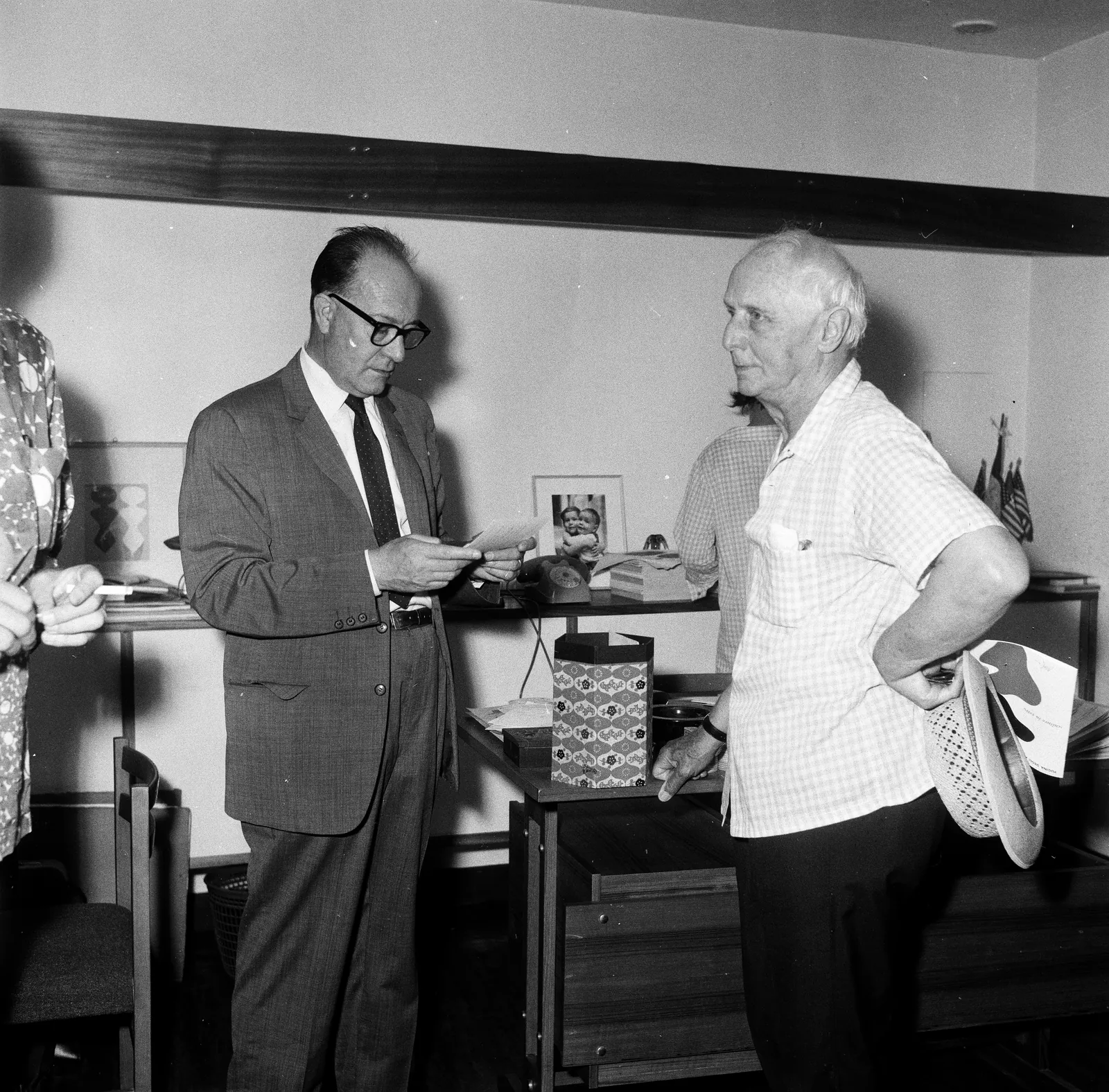
Egidio also translates into glass the Christ in Glory by Mark Tobey. To Ernst and Tobey he will be bound by a friendship and a collaboration from which many works will come.
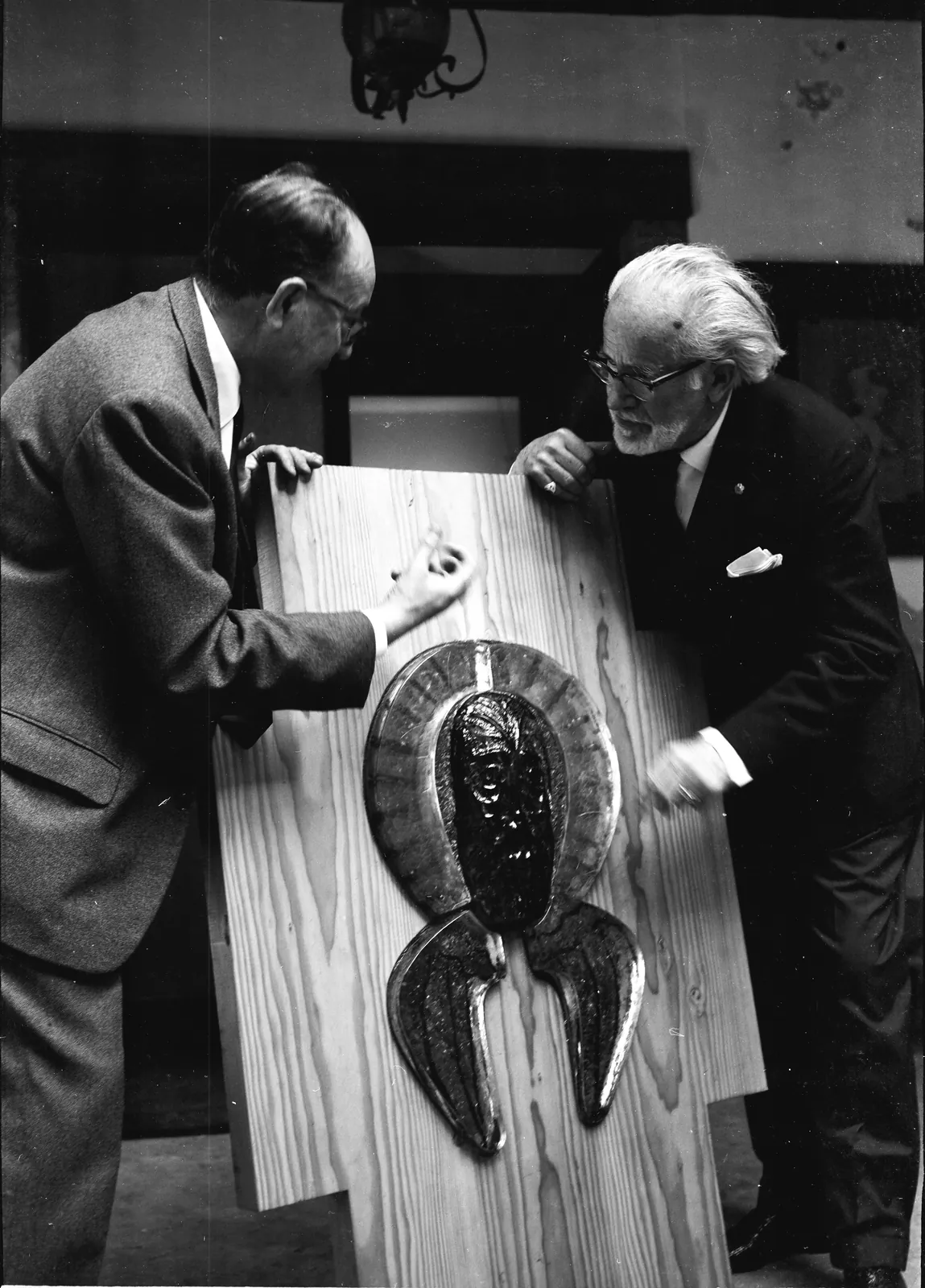
That same year the two works are shown at Ca’ Pesaro, the Museum of Modern Art of Venice: during the months of the exhibition the number of visitors doubles. They then return to the restored home, alongside those of Fontana, whom Egidio had met in Milan, and of Coignard, Dauphin, Krayer, Le Corbusier, Léger, Lobo, Pegeen, Picasso, Severini and Tamaki.
New York
In 1969 Egidio goes to New York at the invitation of his friend Paul Jenkins, a painter of Art Informel, whom he had met in Venice the year before: it is the beginning of a long collaboration and a lasting friendship.
Continued in the chapter Romania, Barcelona, Japan.